

 EN
EN

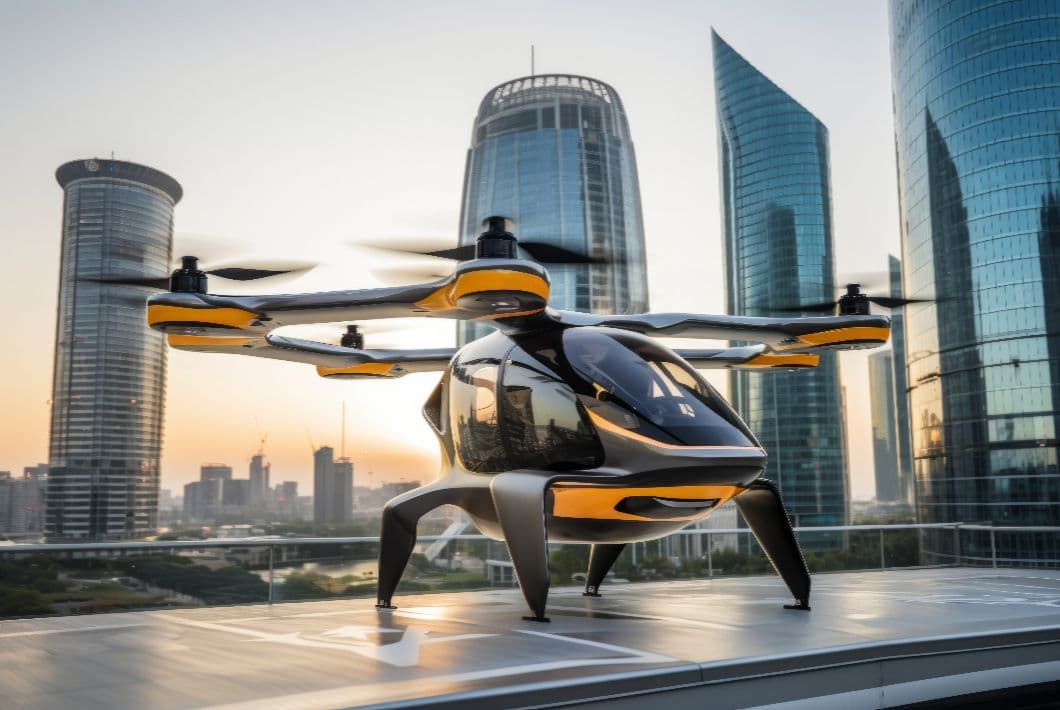
Imagine an air taxi picking you up in the middle of a busy city and flying you straight over traffic to your destination in the suburbs. It might sound far-fetched, but this could become real sooner than you expect.
These air taxis, called electric vertical takeoff and landing (eVTOL) vehicles, are part of a new area of aviation known as advanced air mobility (AAM). One of the first real-world uses is eVTOL airport transfer, where travelers bypass long road trips and connect directly between airports and city centers.
Electric vertical takeoff and landing (eVTOL) vehicles are expected to play a central role in airport transfers. A particular focus will be on airport vertiport infrastructure and how it shapes the future of urban air mobility.
In this article, you will not only learn about eVTOL and vertiport concepts but also discover AirportTransfer.com’s journey to transforming the future of travel. From flying vehicles to next-generation air transfers, we are witnessing technologies that once seemed like dreams rapidly becoming reality. For us, this is not just a matter of transportation; it is a revolution redefining the very meaning of travel.
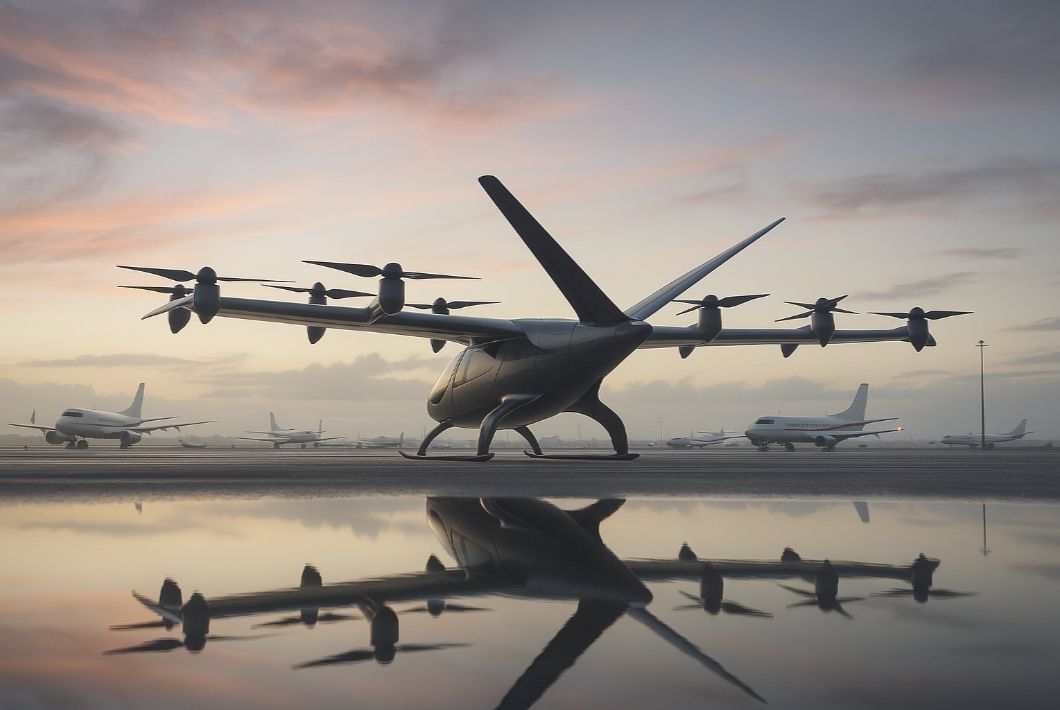
Vertiport Infrastructure for Air Taxi Services
What is a Vertiport?
Vertiports are specialized facilities designed for eVTOL vehicles to take off and land. They can take different forms, such as vertihubs, vertibases, and vertipads. The aircraft themselves are called eVTOLs, short for Electric Vertical Take-Off and Landing vehicles. Unlike airplanes, they do not require long runways—only a clear area where they can lift off and land safely.
Airports and heliports need large spaces and sit far from cities, while vertiports are smaller and can be built closer to people. This makes them ideal for eVTOL airport transfer services linking airports with urban centers.
- Vertical Take-Off and Landing Aircraft: VTOL aircraft can take off vertically, hover, and land without long runways. They fall into main categories: rotorcraft, such as helicopters, which rely on spinning blades for lift, and power-lift aircraft, like tiltrotors, which combine wings with rotors that shift position for vertical or forward flight.
- Electric VTOL Aircraft: Some new aircraft run on batteries instead of fuel. Called eVTOL, they lift and land like helicopters but use electric power, making them quieter and cleaner. Their motors draw energy from large battery packs, which must be recharged at vertiports.
How VTOL Aircraft Use Vertiports
VTOL and eVTOL aircraft can land where regular planes can’t. Vertiports give them safe spots closer to cities, so people don’t always need to travel to big airports. Trips can be across a city or to nearby towns.
Uses of Vertiports
- Passenger trips: eVTOL air taxis move people quickly between vertiports, avoiding traffic.
- Cargo trips: Aircraft can deliver packages faster than trucks.
- Emergency work: Hospitals and rescue teams can use vertiports for rapid medical or disaster response.

Vertiports and eVTOL Aircraft for Short City Flights
Why Are They Necessary?
Unlike road transport, which is often slowed by traffic, eVTOLs offer quicker and more comfortable eVTOL airport transfer services between airports and city centers.
Cities are crowded with traffic, and people lose hours stuck on the road. Vertiports give flying vehicles a place to land and take off, helping move people and goods across short or medium city distances.
They are not meant to replace airports but to support them. Vertiports can also help in emergencies, allowing eVTOLs to move patients or supplies between hospitals much faster than ambulances in traffic.
What makes a vertiport work?
Vertiports are more than parking spots for flying cars. They are part of the air taxi infrastructure and must keep people and aircraft safe while handling both passengers and cargo. They use:
- Navigation systems to guide flights and prevent accidents.
- Safety sensors to spot risks and send alerts.
- Cargo systems to load goods quickly.
- Pilotless support to share updates and enable safe flights without a pilot.
By integrating all these systems, vertiports become a core part of air taxi infrastructure, creating the groundwork for safe and reliable urban air mobility.
What Kind of Aircraft use Vertiports?
- Logistics drones carry small to medium packages such as food, medicine, or urgent supplies, and can reach disaster zones by flying over blocked roads.
- Air taxis transport passengers like regular cabs but travel through the sky, with bookings made via apps to cut city travel times.
- Medical eVTOLs support health care by enabling rapid flights between hospitals, labs, and supply centers, moving patients faster than ground ambulances in traffic.

Airport Connections with eVTOL Air Taxis and Vertiports
Case Studies & Trends
Electric Vertical Take-Off and Landing aircraft (eVTOL) are small flying machines that use electric power to lift straight up, fly, and land without a runway. They can fly short trips in cities and between airports. These aircraft are quiet, fast, and clean compared to normal helicopters.
Why People Look At eVTOL for Airport Transfers
Travel to and from airports often takes more time than the flight itself. City roads stay crowded with cars. Delays add stress for people who must catch flights. eVTOL can fly over traffic in minutes. This makes it useful for short airport routes.
Now, let us look at some case studies that show how companies test and plan eVTOL flights.
Joby Aviation in the United States
Joby Aviation is one of the best-known eVTOL makers. The company built an aircraft with six tilting propellers. It can fly at high speeds and carry four people plus a pilot.
In 2023, Joby tested an airport-to-airport flight in the United States. The flight lasted only 12 minutes. It showed that eVTOL can take off at one airport, land at another, and do this with safe controls. This test is a key step before carrying real passengers.
The U.S. Federal Aviation Administration (FAA) is working with Joby to approve its aircraft and vertiport design. If approval is granted, Joby could begin operating short city flights by the middle of this decade.
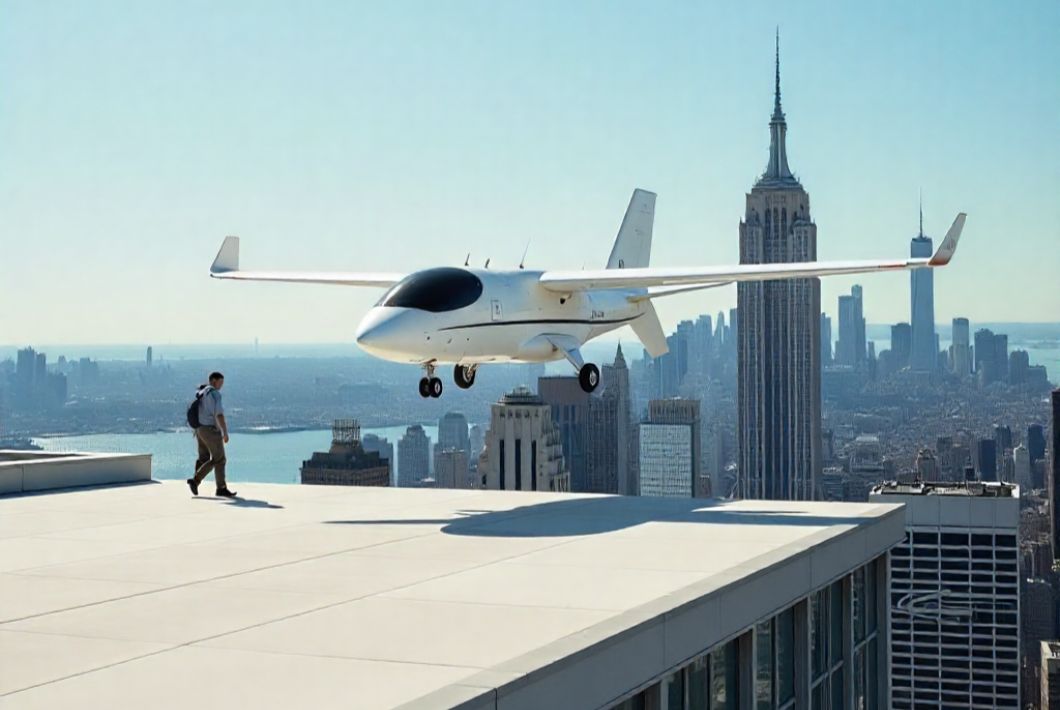
Air Taxi Networks & Vertiports in United States
Archer Aviation and United Airlines
Archer Aviation is another eVTOL maker. It works with United Airlines to plan a network of short air taxi routes in New York.
Their plan is simple. Archer’s eVTOL aircraft will fly people between Manhattan and major airports like Newark and JFK. These flights will take only 5 to 15 minutes. By road, the same trip can take more than an hour in traffic.
United Airlines sees eVTOL flights as a way to give passengers faster connections between airports and city centers. For example, instead of a long drive, travelers could fly directly from Newark Liberty Airport to New York City in just minutes. The same concept could work in the other direction, with short aerial trips linking JFK to Newark, helping passengers transfer between airports much more quickly.
Virgin Atlantic and Joby in the United Kingdom
Virgin Atlantic and Joby are working together to develop air taxi routes in the United Kingdom. One planned route is between London Heathrow and Manchester, a journey that usually takes hours by car or train. With eVTOL aircraft, the same trip is expected to take only about 8 minutes.
This case highlights how eVTOL technology can transform longer ground journeys into very short flights. Virgin Atlantic also aims to provide quick city access, such as connecting Heathrow Airport to London City Center, making travel far more direct and time-saving. In this partnership, Joby supplies the aircraft, while Virgin Atlantic supports the wider flight network
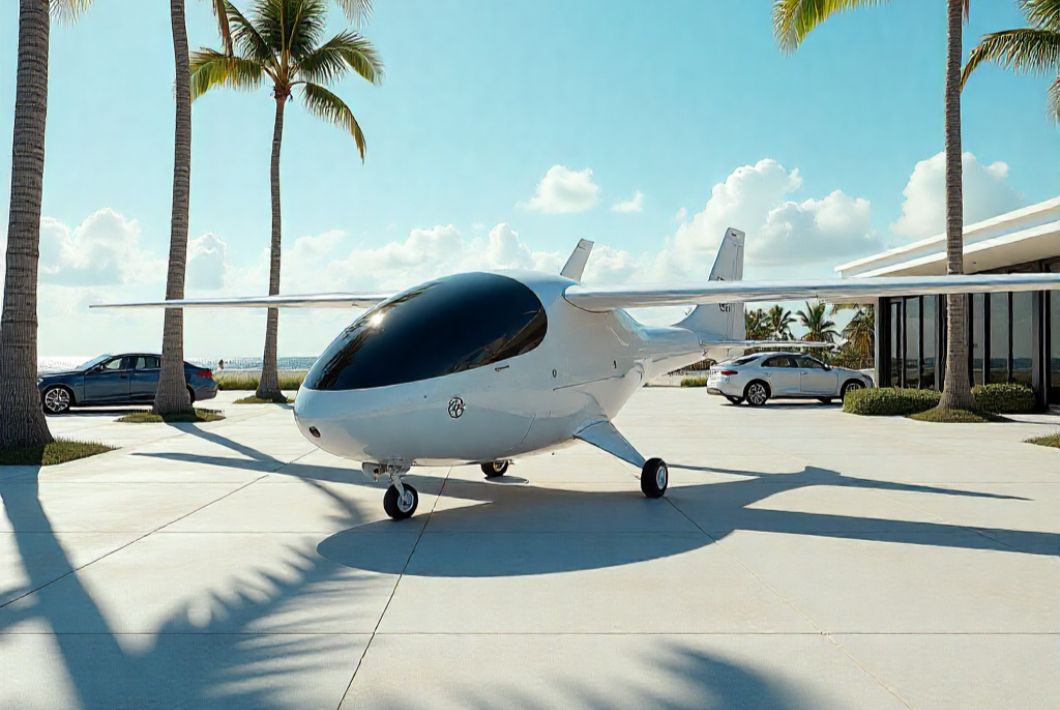
eVTOL for Airport Trips with Air Taxis and Vertiports
Volocopter in Paris, France
Volocopter began test flights in Paris , France in 2021. One important flight took place at Pontoise airfield just outside the city.
The aircraft lifted off and landed safely under the eyes of French regulators. The tests showed how eVTOL could one day link Paris Charles de Gaulle Airport with central Paris in only minutes.
These Paris flights also helped train airport staff, air traffic controllers, and ground teams for future service.
Volocopter in Seoul, South Korea
In November 2021, Volocopter flew a piloted test at Gimpo Airport in Seoul. The aircraft lifted off inside a working international airport. This was the first time a crewed eVTOL flew in South Korea.
The test was part of South Korea’s Urban Air Mobility program. Government leaders and media watched from the ground. It marked a step toward safe air taxi use in Korea.
Joby Aviation in Tokyo, Japan
In 2023, Joby flew its aircraft in Japan. The flight took place at a Toyota site in Shizuoka Prefecture. This was the first public Joby flight outside the United States. Toyota is one of Joby’s key partners and supports its entry into the Japanese market.
The Tokyo-area test prepared Japan for future flights at Osaka Expo 2025 and possible routes linking major airports with city centers.
Trends in eVTOL Airport Transfers
1. Short Flight Times: Most planned routes last between 5 and 15 minutes. These flights save time compared to road trips that can last over an hour.
2. Partnerships With Airlines: Airlines like United and Virgin work with eVTOL makers. Airlines give access to airports, passengers, and ticket systems. eVTOL makers provide the aircraft and pilots.
3. Focus on City-Airport Routes: The first use of eVTOL will not be long trips between cities. It will be short routes from airports into city centers. These are simple to test, and demand is strong.
4. Testing and Safety: Flight tests like Joby’s 12-minute airport flight show safety and trust in the new aircraft. Regulators in each country need many tests before public flights begin.
5. Clean Energy Use: All eVTOL use electric power. This lowers noise and cuts pollution compared to helicopters and cars. Airports see this as a way to meet green goals.

Fast City Links with eVTOL Airport Transfers
Roadmap & Expectations
Regulators such as the FAA are developing guidelines to ensure eVTOLs can be safely introduced into urban transport networks.
The roadmap for eVTOL adoption covers aircraft design, safety regulations, charging infrastructure, vertiport design, and building public trust. The development path is generally outlined in three stages: initial limited routes expected around 2025, broader expansion by 2030, and large-scale long-range networks by 2040.
2025 – First Routes and Trials
By 2025, many expect to see the first eVTOL flights carrying paying passengers. These flights will focus on short trips where time savings are clear.
- Airport Transfers: Routes like Heathrow–London or Newark–NYC will test eVTOLs, cutting trips from over an hour to under ten minutes.
- Pilot Projects: Firms such as Archer, Joby, Lilium, and airlines like United and Virgin Atlantic are planning early services.
- Vertiports: First sites will be at airports, train hubs, or rooftops, with charging, waiting areas, and safety staff.
- Safety Checks: U.S. and European regulators will allow only short, controlled routes at first.
- Battery Range: By 2025, flights will last 20–40 minutes, limited to city or short regional trips.
In this stage, the main goal is to prove that eVTOLs can work in daily service. People will see if they are safe, quiet, and worth the price.
2030 – Expansion and Integration
By 2030, eVTOL use will spread into wider city travel. More companies and cities will join, and more vertiports will appear.
- Network Growth: Cities may see hundreds of eVTOLs linking airports, business areas, hospitals, and nearby towns.
- Air Traffic: NASA and FAA are creating systems to manage low-altitude routes, avoid conflicts, and track charging.
- Public Trust: Years of safe flights and lower noise will build confidence, while ticket prices drop as fleets expand.
- Battery Progress: Improved batteries may allow 60-minute flights, with some hybrid designs in use.
- Cargo Use: eVTOLs could move more packages between warehouses and city centers, with faster adoption than passenger flights.
This stage shows real growth. eVTOLs will move from small trials into daily service across many cities worldwide.
2040 – Long Range and Full Networks
By 2040, eVTOLs could become part of daily transport in many regions. Routes will stretch far beyond city centers.
- City-to-City Trips: eVTOLs may fly up to 150 miles, linking nearby cities faster than road travel.
- Vertiport Networks: Expanded hubs in cities, airports, suburbs, and rural areas will include charging, landing pads, and digital tracking.
- Short Flights: Some eVTOLs could replace regional planes on 100-mile trips with 30-minute rides.
- Public Access: Falling costs may open service to commuters and families, not just business travelers.
- Medical Use: Quick hospital and town connections can save lives and aid remote areas.
- Cargo Growth: Cargo eVTOLs may replace trucks for light goods under 200 miles, cutting traffic and speeding deliveries.
By 2040, eVTOLs will be a common sight in the sky. They will serve as short-haul air taxis, cargo movers, and medical support. Their role will depend on strong batteries, smart traffic control, and public trust.
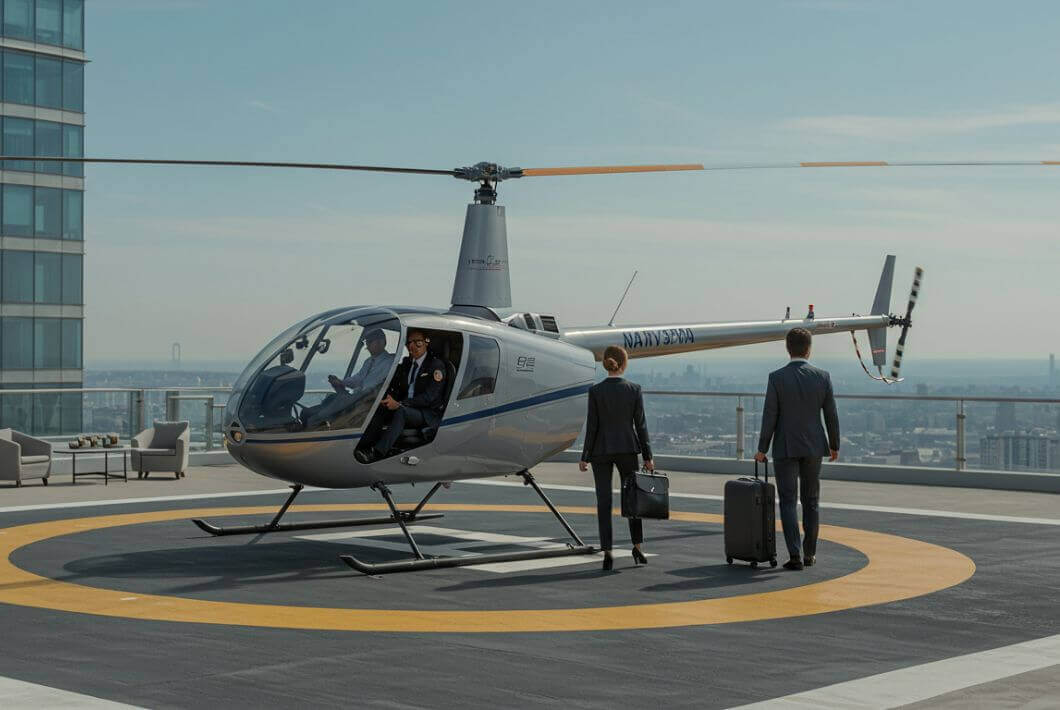
From Ground to Sky: AirportTransfer.com’s eVTOL Roadmap

AirportTransfer.com’s Vision for the eVTOL Era
AirportTransfer.com, one of the global marketplace leaders in airport taxi transfers, has set its sights not only on ground transportation but also on shaping the future of air mobility.
As leading companies around the world rapidly advance their eVTOL projects, AirportTransfer.com continues to maintain active engagement with these pioneering brands.
This vision aims to:
-
Reduce transfer times between airports and city centers to mere minutes,
-
Provide an eco-friendly journey with sustainable, electric, and quiet air vehicles,
-
And offer travelers the convenience of booking all their transportation options through a single platform.
In short, for AirportTransfer.com, this is not just about keeping up with technology; it is about redefining the future of travel and positioning itself at the very heart of this transformation.
eVTOL airport transfer projects are no longer just plans. They are moving into test flights and real service models. With strong vertiport design, better airport vertiport planning, and air taxi infrastructure in place, urban air mobility can soon support both travelers and cities.
The future of airport transfers will not only depend on planes and cars but also on eVTOLs that bring fast, direct, and reliable service.